

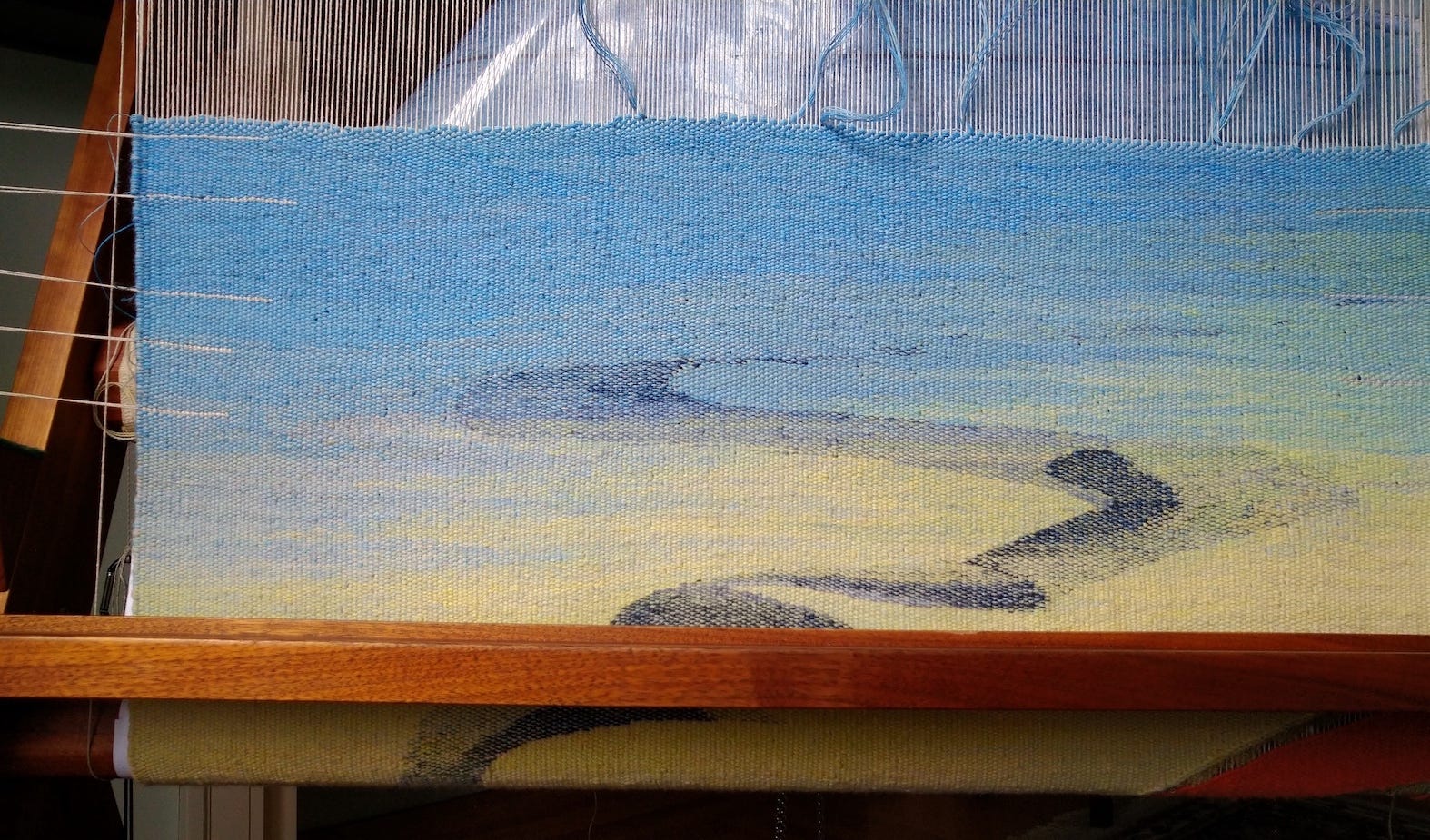
All images by Minna Rothman
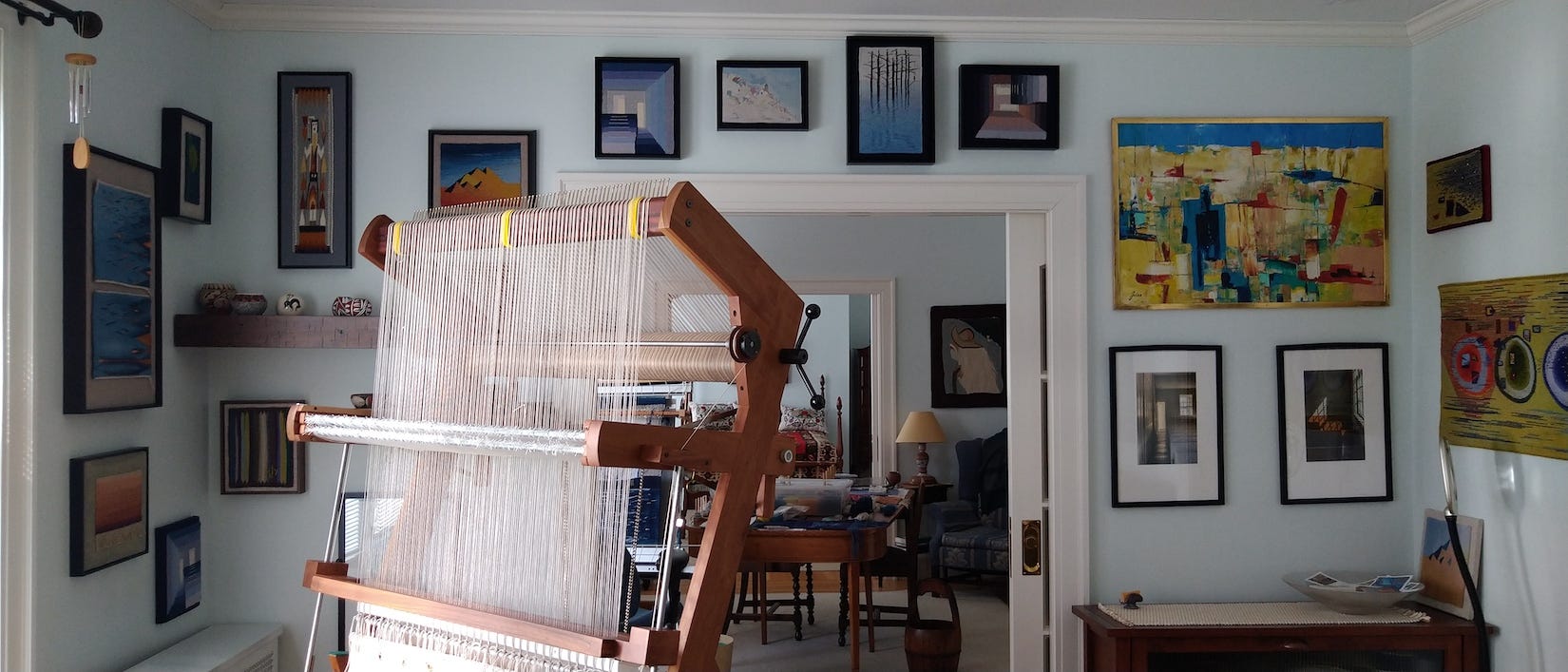
After dedicating my career to the intricate world of climate modeling, I discovered tapestry in my retirement—a medium that fulfilled my passion for visual arts. As a physicist by training, I had always viewed the world through a lens of analysis and precision. However, art has been my constant companion, a source of solace and expression since childhood.
My profession as a physicist required collaboration with scientists from around the globe, leading to extensive travel both domestically and abroad. Amid the whirlwind of meetings and conferences, I always carved out time to explore local fine arts museums, some renowned and others hidden gems. It was in these spaces, surrounded by a wealth of creativity, that I stumbled upon tapestry—a medium that seamlessly intertwined my love for storytelling with the organic nature of the craft.
Having lived in Boston for nearly forty years, I’ve immersed myself in the local art scene. My passion for tapestry deepened as I studied under several well-known artists in their studios, absorbing their techniques and insights. Inspired, I eventually created my own studio nearby, a sanctuary where I could fully express my artistic vision.
Now, each tapestry I weave becomes a unique narrative, allowing me to share personal stories and explore universal themes through texture, color, and form. Tapestry has transformed into a powerful medium of expression, connecting my scientific background with the art that has always inspired me.
As a climate scientist, I’ve always been captivated by the way atmospheric dynamics shape our planet. Birds utilize atmospheric winds for migration and daily survival, but when they flock together, a fascinating collective behavior emerges. The murmuration patterns of starlings, for example, symbolize the balance between individual actions and collective experience. These patterns not only show how birds protect each other and maintain cohesion, but also illustrate their adaptation to prevailing winds and environmental conditions.
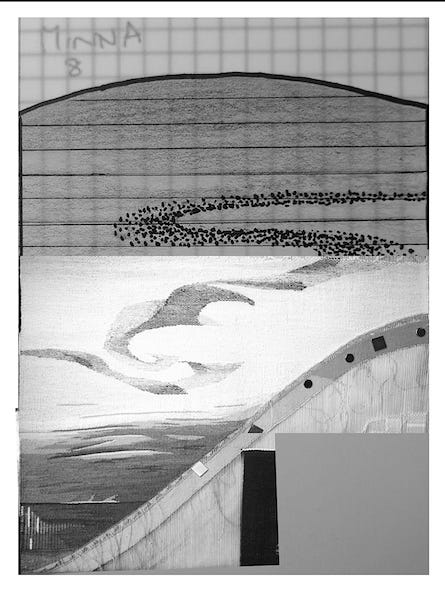
The Murmuration Collaboration Project perfectly embodied this concept. Tapestry weaving, though deeply personal, became a medium for exploring the dynamic between individual and collective. The project provided a unique opportunity to tell a story that surpasses any single tapestry’s narrative.
Having previously collaborated on the Waterline Project, the twelve weavers/artists involved were familiar with each other’s work. Much like starlings in murmuration, we guided and influenced one another throughout the design process, working together to achieve a harmonious flow.
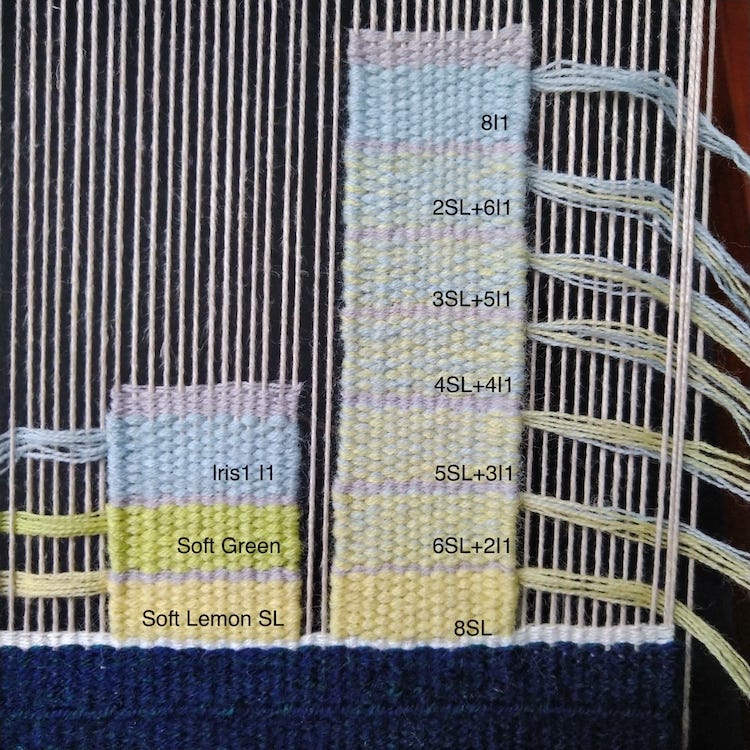
Once we settled on the core colors, we needed to create samples that not only satisfied our designs but also helped our neighbors maintain the continuity of the composite.
The mesmerizing, fluid shapes of starling murmurations inspired my tapestry design. I aimed to capture this endless fluidity, illustrating how motion transcends borders and differences. Just as the birds' journey weaves across countries, my design reflects the continuous, boundless flow of nature and the unity it represents.
In creating a tapestry, I consider more than just size, composition, and materials; I carefully select the technique that best suits the concept. I’m particularly pleased with the effects of the technique I chose and how my work integrates into a composite tapestry where each artist’s unique approach enhances the overall design, creating a cohesive and harmonious piece.
The overall design dictates that all individual tapestries must be shaped accordingly. However, this is where the similarities end. Each tapestry varies in size and shape, which requires careful consideration for continuity in the final display. To achieve this, each weaver selects a method for finishing the shaped selvedges based on the dimensions of their tapestry. This is how I approached the selvedges of my own work.


This project has been a valuable lesson in distinguishing between a composite tapestry and a series of tapestries on the same theme. It highlighted the importance of connection and mutual understanding, demonstrating how integrating individual techniques into a single work creates a more nuanced and cohesive expression. Just as starlings communicate and respond to each other’s movements, the project underscored the essential nature of collective synergy in bringing the overarching concept to life.
I hope that this experiment will pave the way for new approaches to collaboration among tapestry artists around the world.
Correct, Jan, there were fifteen participating artists in the Waterline Project. Twelve (out of fifteen) artists continued with the Murmuration Collaboration Project. Thank you for pointing out how my writing may suggest otherwise.
There were 15 artist participants in Waterline, not 12